Harmony
An app empowering caregivers with the tools that make a difference.
- MOBILE INTERFACE
- WEB INTERFACE
- PRINT MATERIALS
Role
- Project Manager
- Graphic Designer
- UX/UI Designer
Tools
- Figma
- Illustrator
- After Effects
- Notion
- Linear
Timeline
Aug → Dec 2024
introduction
Caregiving is a complex responsibility. It often requires managing medication schedules, coordinating doctor's appointments, and keeping family members informed all while maintaining one's own personal well-being.
For over five million Canadians, this juggling act is especially difficult within underrepresented communities, where access to resources is limited and support networks are often fragmented.
challenge
How can caregivers provide consistent, quality care without feeling overwhelmed or burned out?
Caregiving often comes with emotional stress, packed schedules, and breakdowns in communication that turn daily responsibilities into heavy challenges. Harmony was created to help lighten that load, making care more manageable and sustainable.
solution
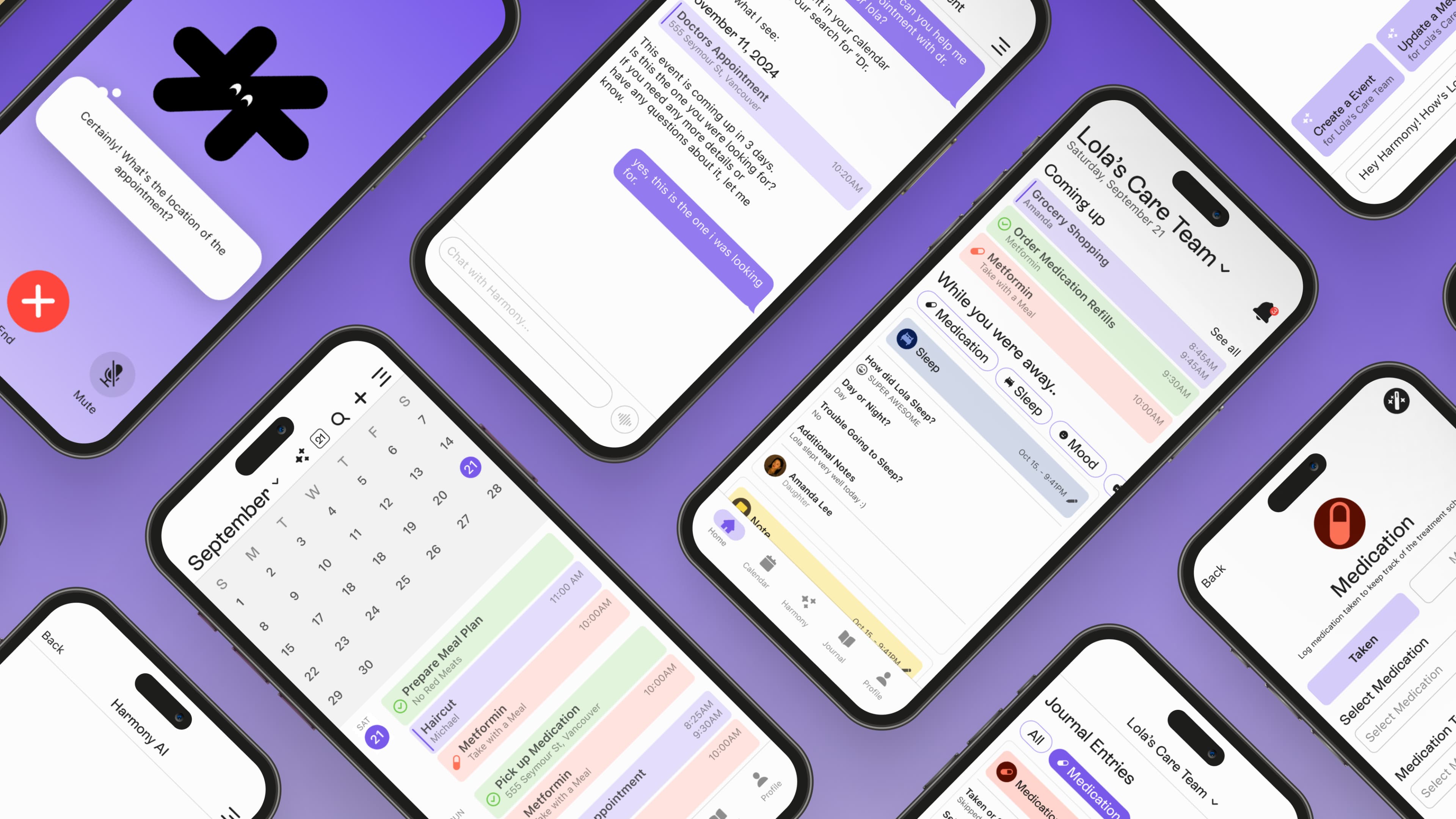
Harmony is a web application built to support caregivers by simplifying their everyday responsibilities. Through a thoughtful combination of AI-powered tools and collaborative features, Harmony helps deliver personalized, consistent care while reducing stress and supporting balance in caregivers' lives.
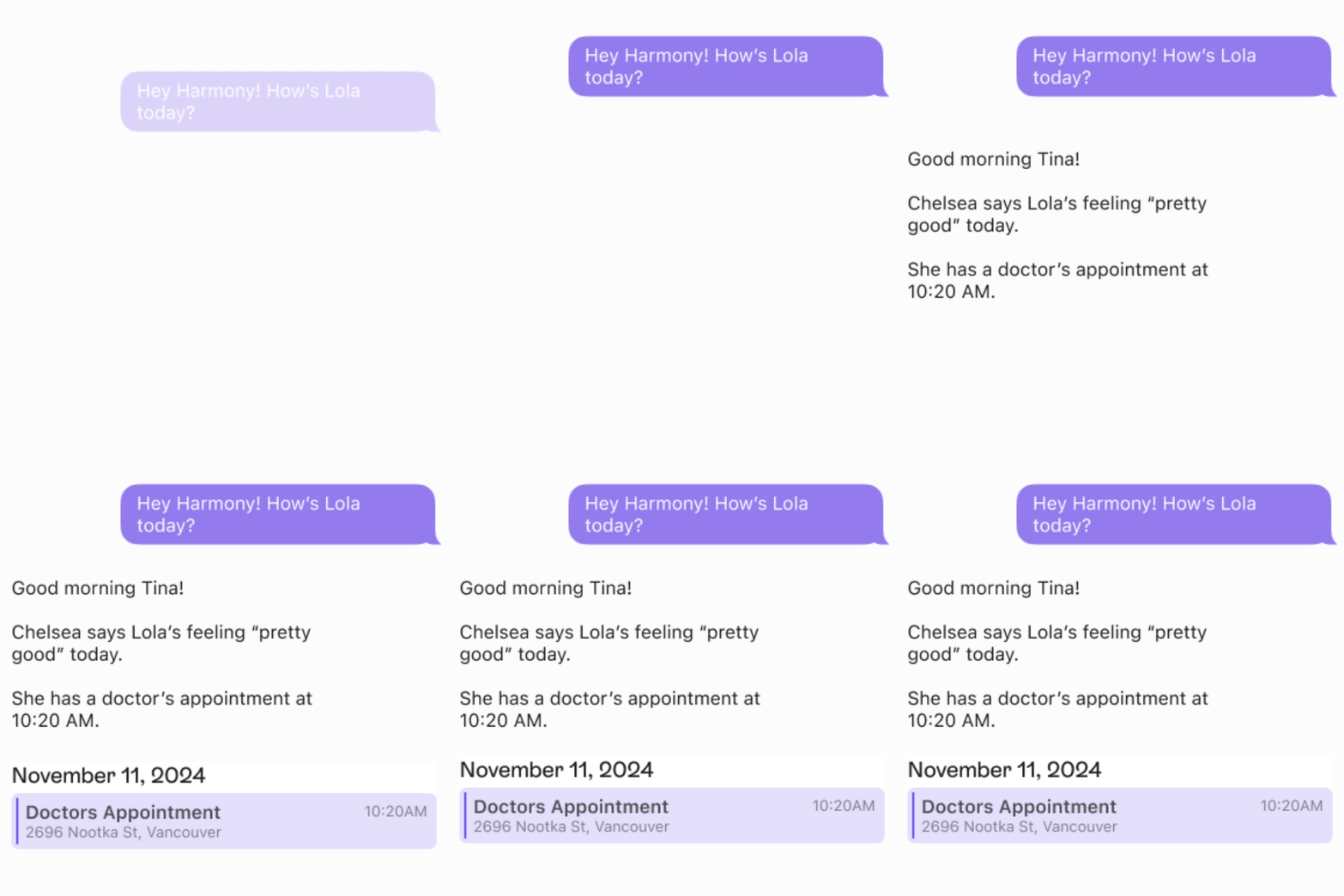
At the core of the app is Harmony AI, an intelligent assistant designed to help manage caregiving tasks through reminders, updates, and guidance.
Research and Insights
To gain a deeper understanding of caregiving challenges, twelve interviews were conducted with individuals actively caring for loved ones. These conversations revealed consistent patterns across diverse caregiving experiences.
01
80% of caregivers experienced emotional stress or felt overwhelmed by the weight of their caregiving duties.
A large majority of caregivers reported feeling overwhelmed by the emotional demands of caregiving, especially when balancing medical needs with other life commitments.
02
70% of caregivers reported challenges in managing their time and maintaining a healthy work-life balance.
Caregivers struggled to balance caregiving duties with work and personal life, leading to stress and burnout.
03
60% of caregivers struggled with navigating the healthcare system and coordinating medical appointments.
Caregivers struggled to navigate the healthcare system, from scheduling appointments to communicating with medical professionals. This added complexity made it harder to provide effective care.
competitive analysis
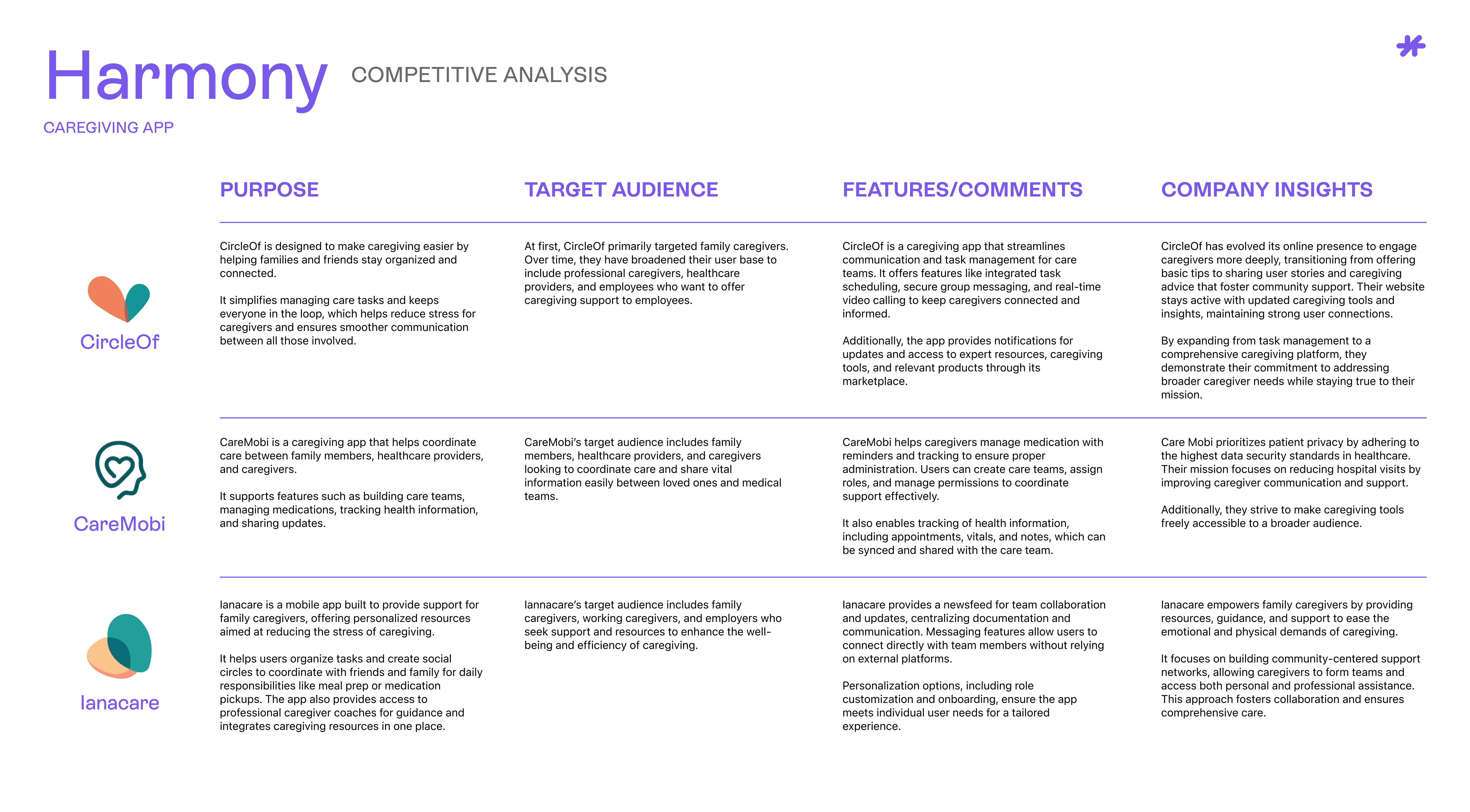
Research into existing caregiving platforms like CircleOf, CareMobi, and Ianacare revealed that the landscape is moving past simple task management. Many tools now highlight communication, health tracking, and community support.
Yet, what's still missing is a truly seamless experience—one that blends automation with emotional care and cultural understanding. Harmony was created to bridge that gap, offering caregivers a solution that is both smart and compassionate.
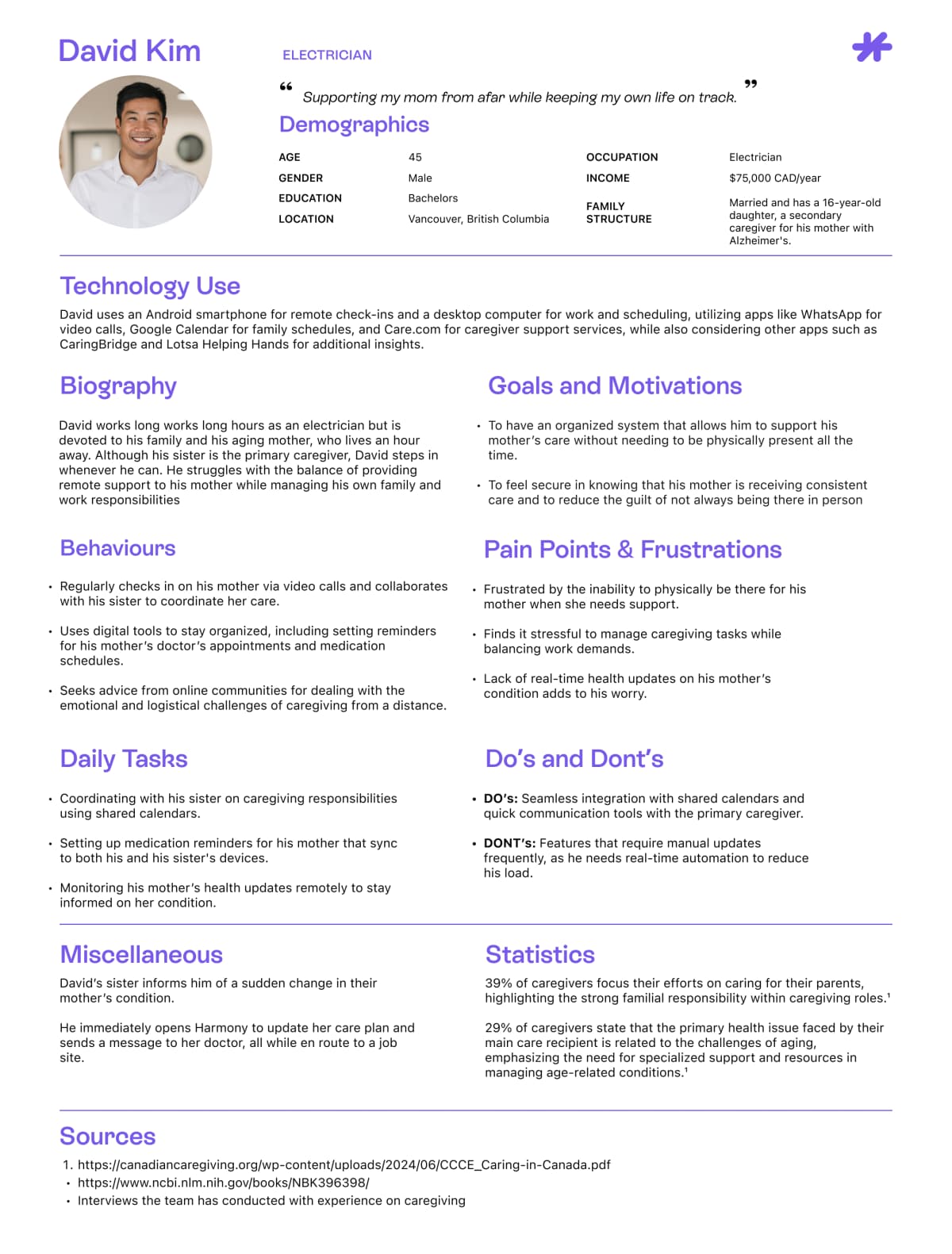
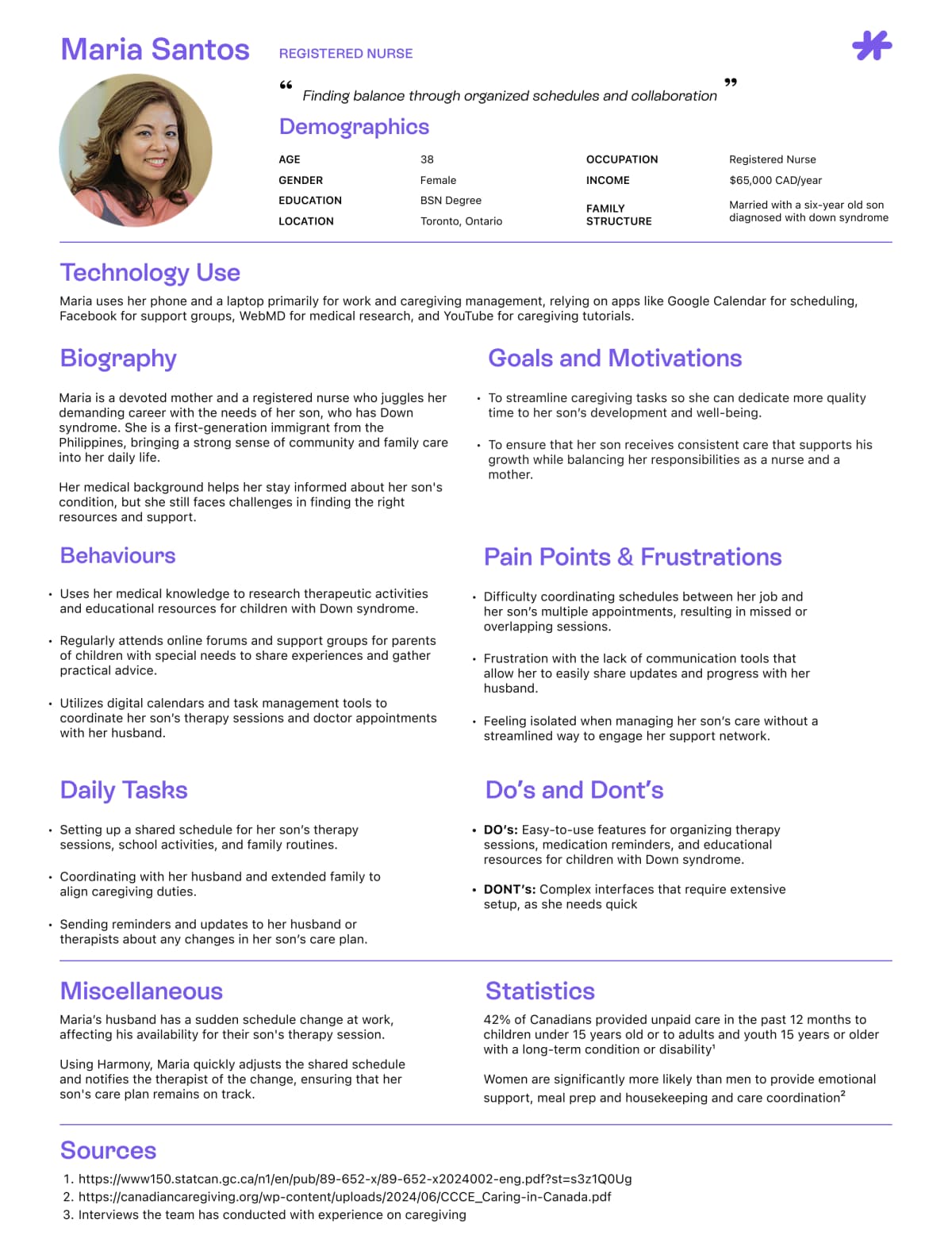
User personas were developed to represent a spectrum of caregiving scenarios. These two personas helped inform design decisions and demonstrate how Harmony could meet a variety of unique needs, from full-time caregivers managing intensive medical routines to family members coordinating occasional tasks.
USER FLOWCHART
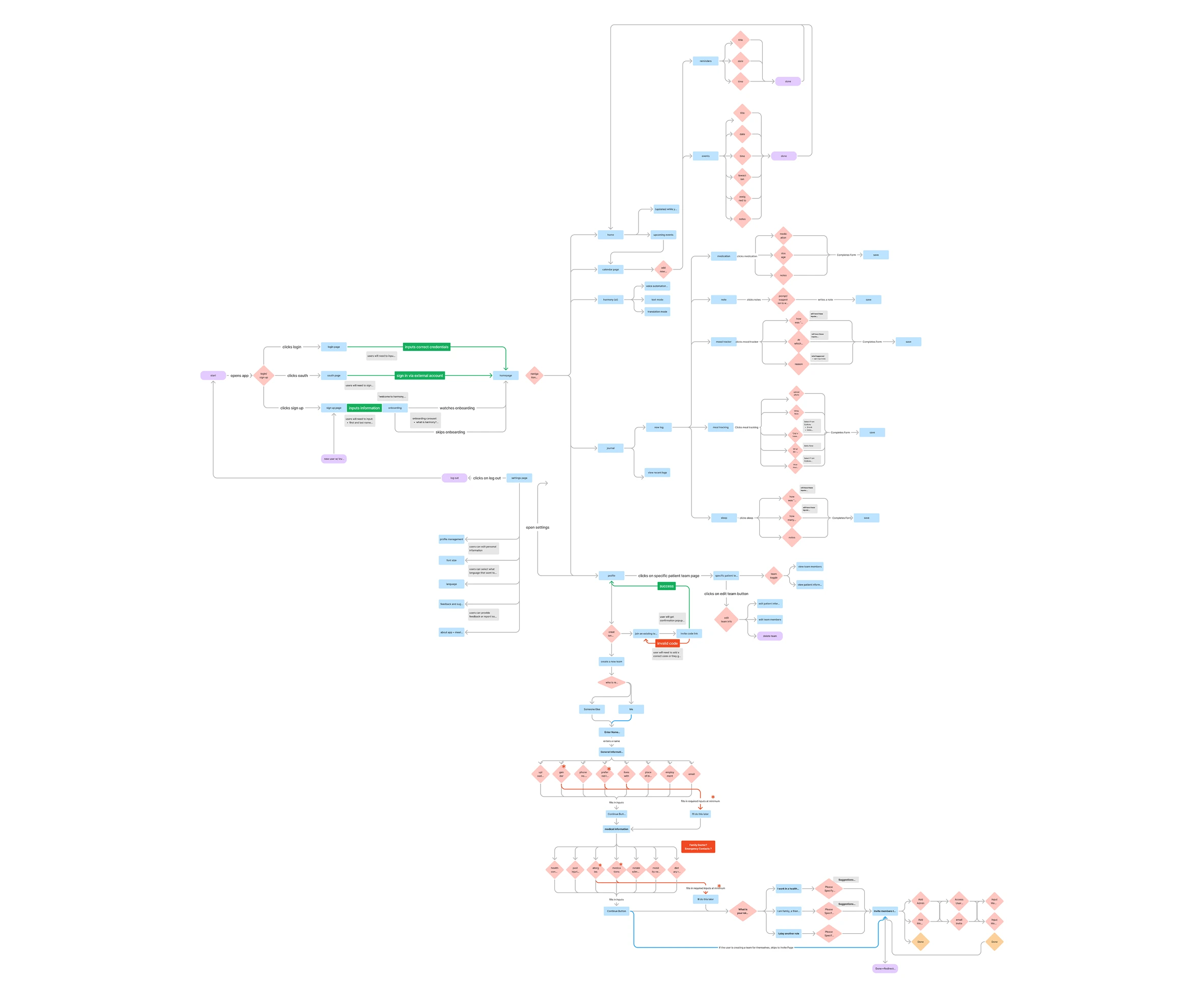
To better understand how caregivers would interact with Harmony, a comprehensive user flow was developed. This visualization outlined the step-by-step journey through the app, highlighting touchpoints, decisions, and core features. By mapping the experience early, the team was able to refine navigation, remove friction, and ensure that the most essential caregiving tasks remained clear and accessible.
LOFI wireframe
Low-fidelity prototype was developed to outline the fundamental structure and functionality of Harmony. It served to map essential features, user interactions, and navigation flow, enabling early feedback and iteration before progressing to high-fidelity designs.
Harmony’s branding was inspired by the fluidity and interconnectedness of jellyfish, a symbol chosen to reflect care, softness, and community.


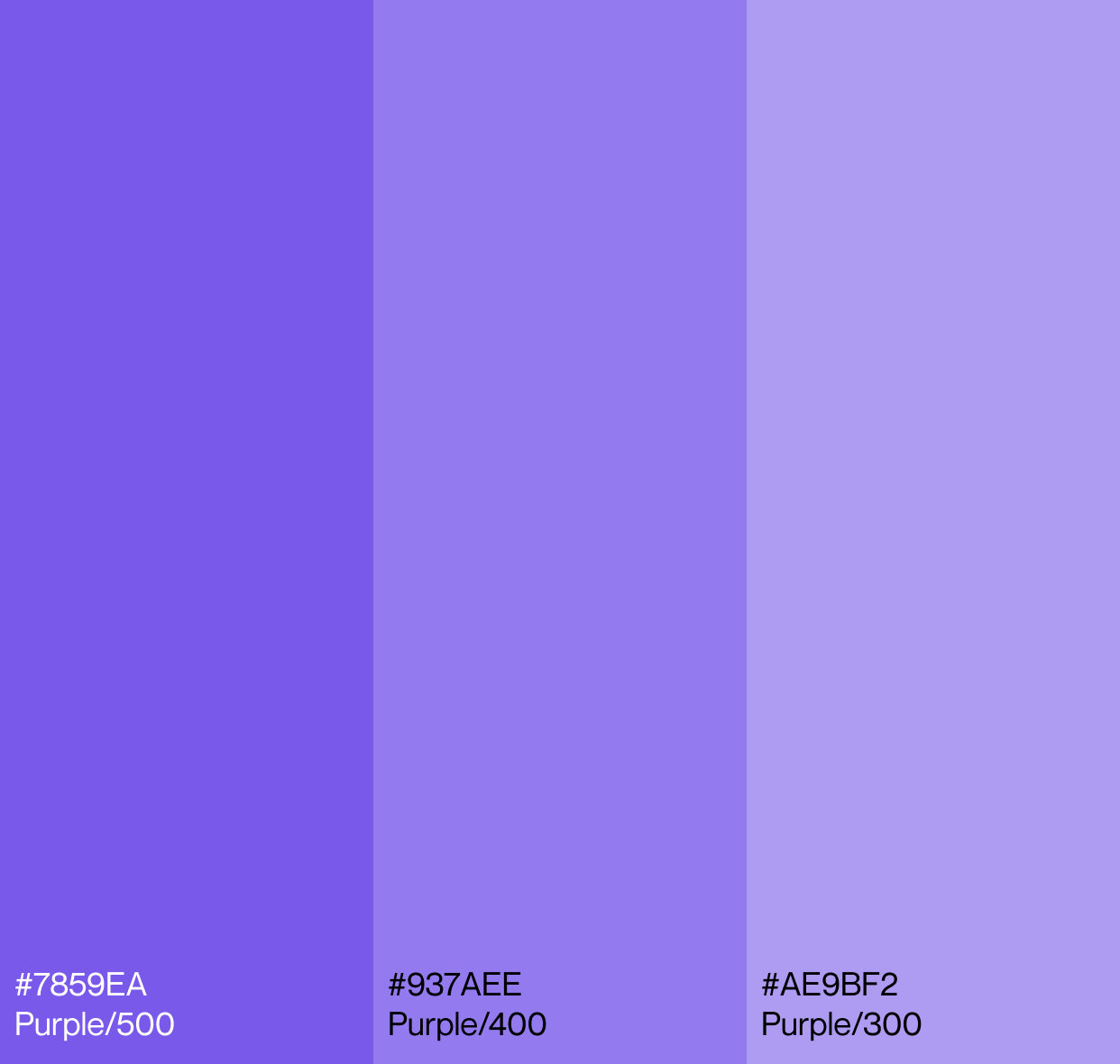
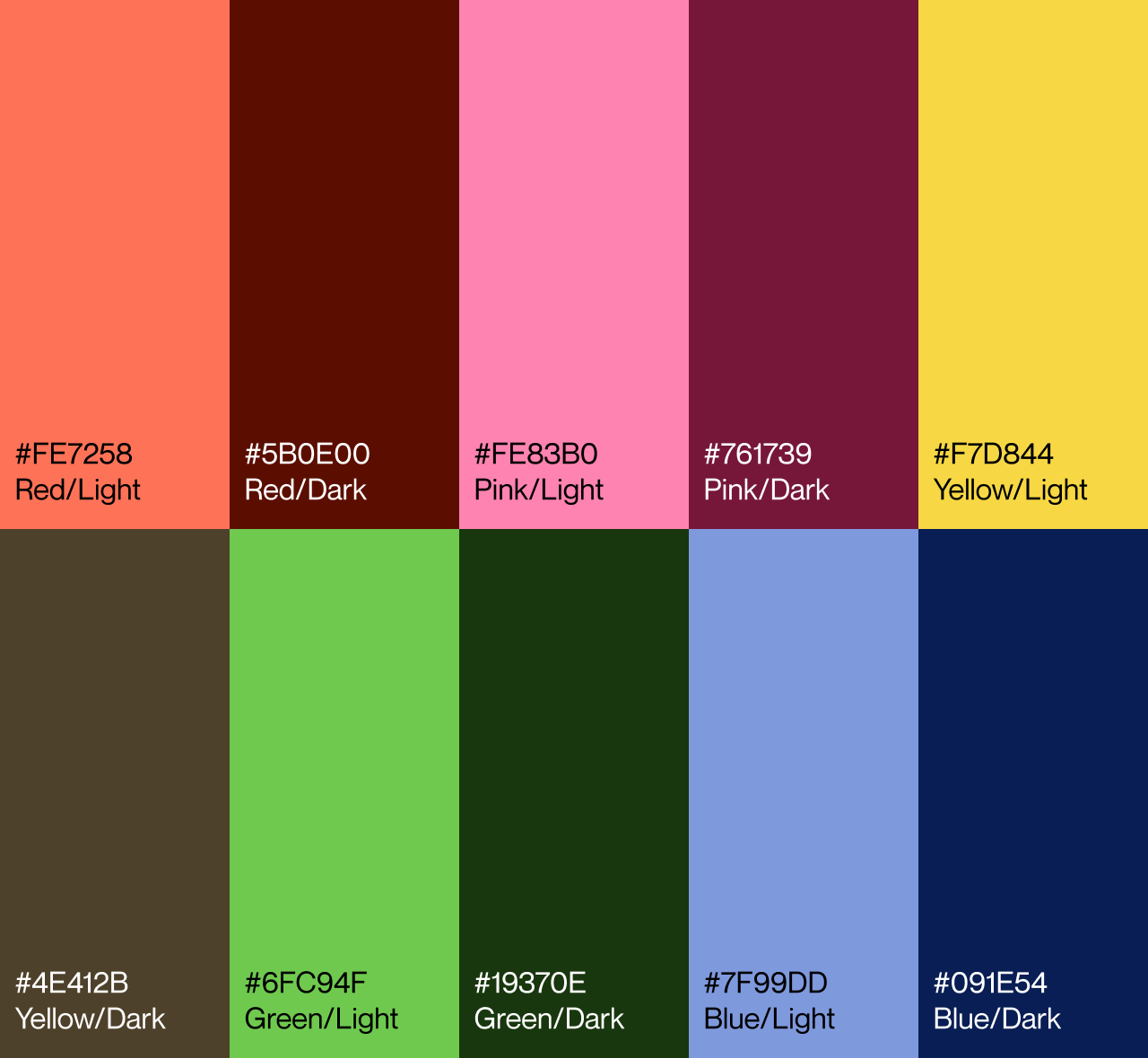
A calming purple palette was selected to evoke feelings of balance and trust, supported by a range of secondary colours that represent the diversity of caregiving experiences.
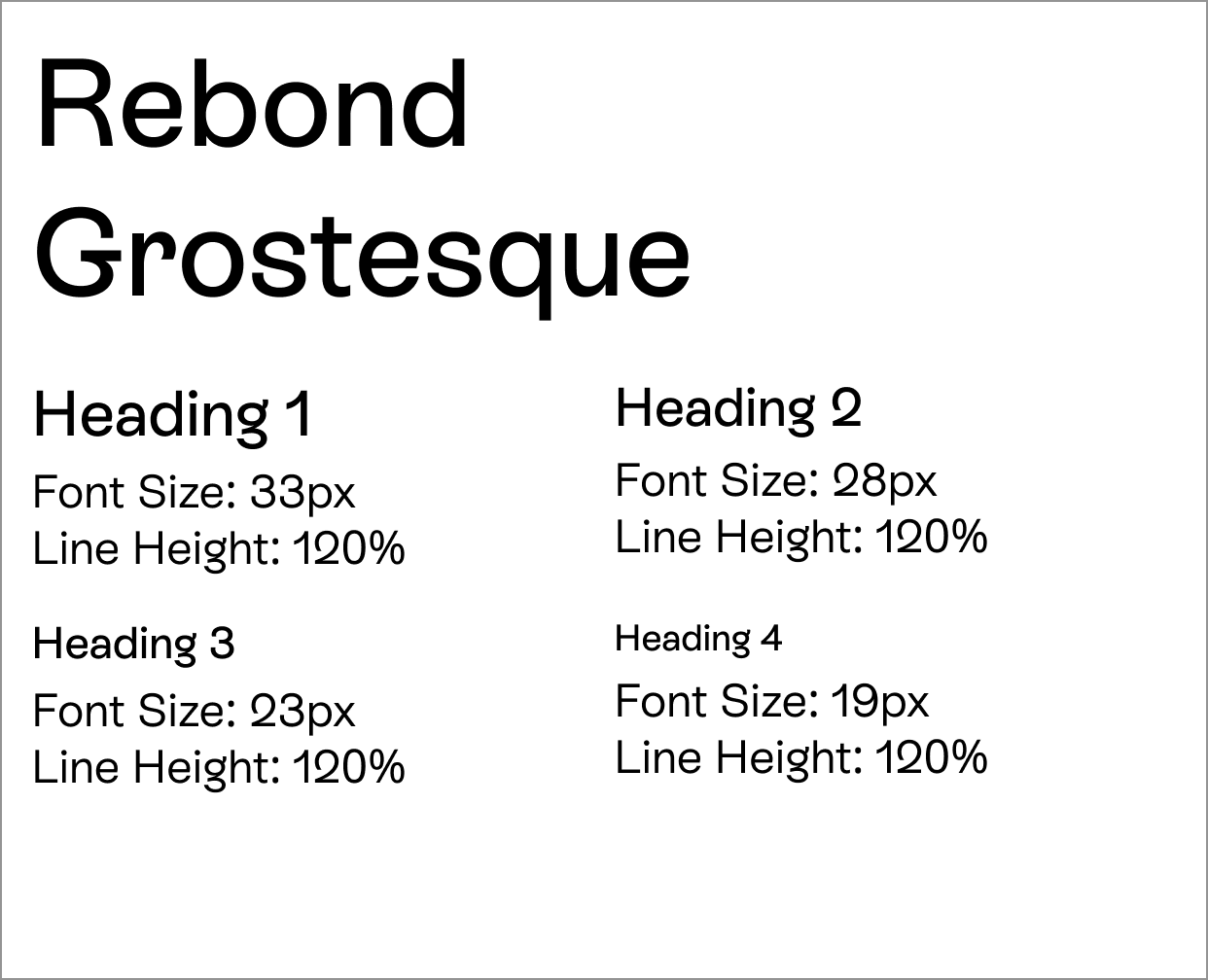
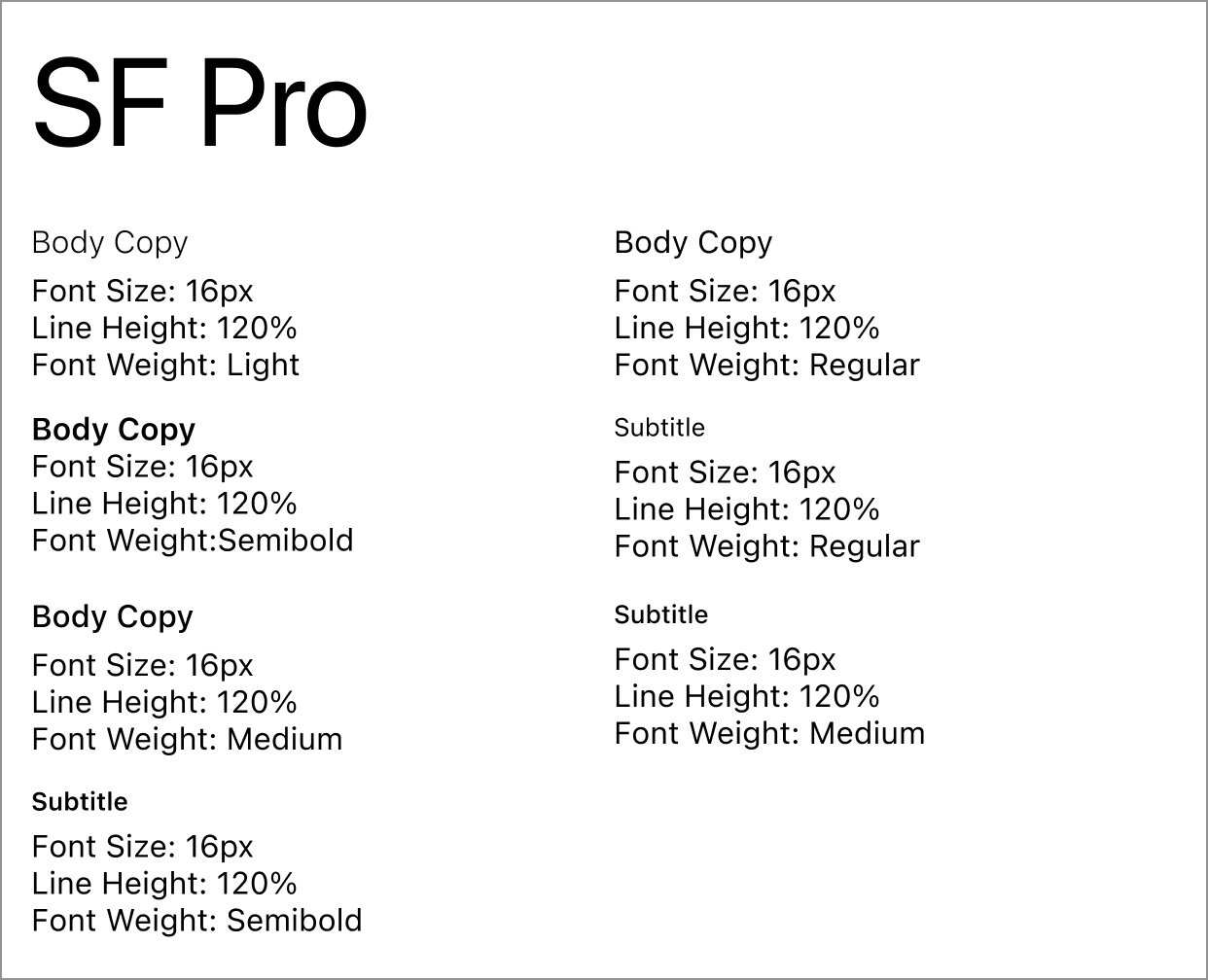
Using SF Pro and Rebond Grotesque, the typography balances clarity with character ensuring accessibility while adding a modern, approachable feel. The brand’s overall tone conveys warmth, simplicity, and respect, with visuals designed to feel inclusive and relatable for diverse communities.
Final Designs


Harmony’s final designs address caregivers’ key challenges: juggling tasks, staying organized, and communicating clearly. Features like an interactive calendar, personalized alerts, AI assistance, health tracking, and team collaboration streamline routines, reduce stress, and provide a complete support system.
Promotional Design Materials
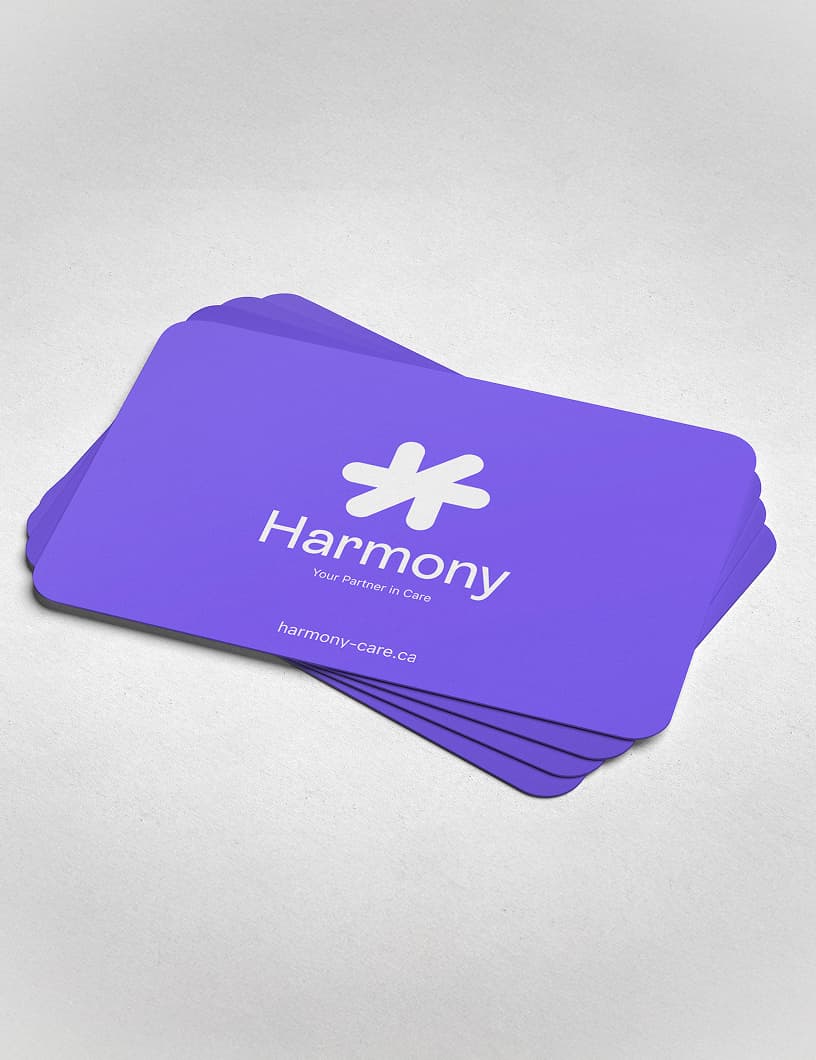
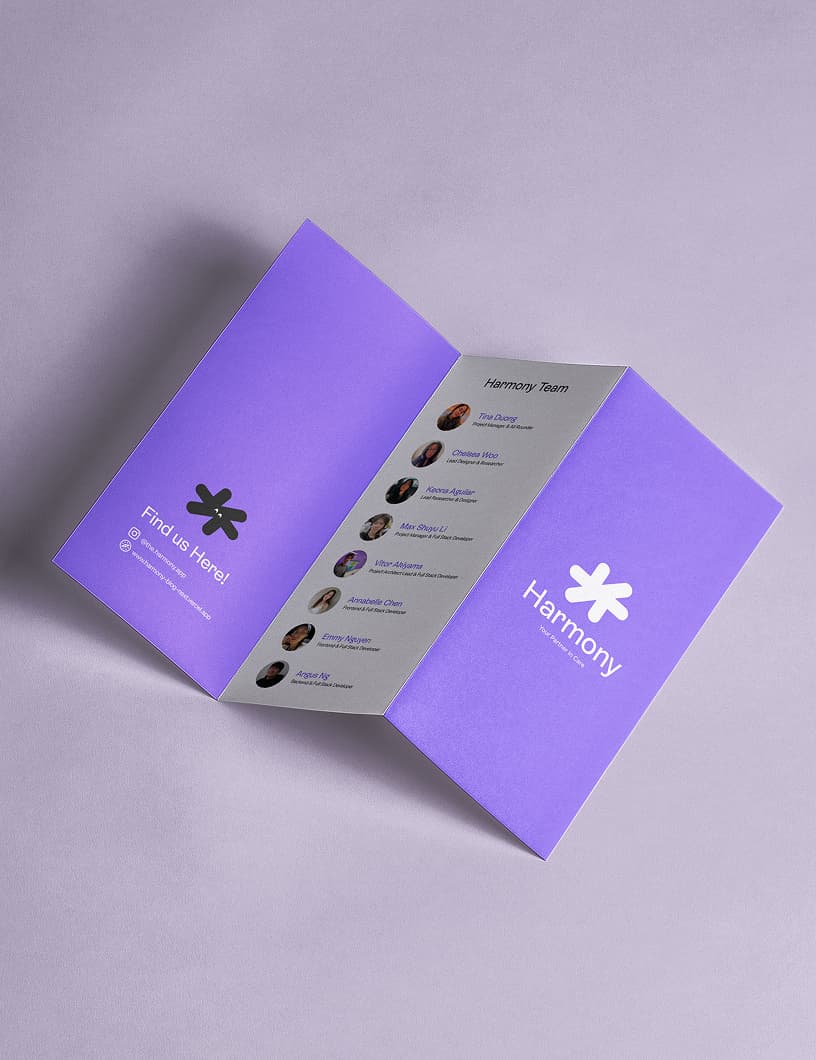
To support the launch of the app, promotional materials were created to reflect Harmony’s values and visual identity. Business cards were designed with a minimalist, horizontal layout featuring the tagline “Your Partner in Care.” The back includes clean contact details in a soft purple tone.
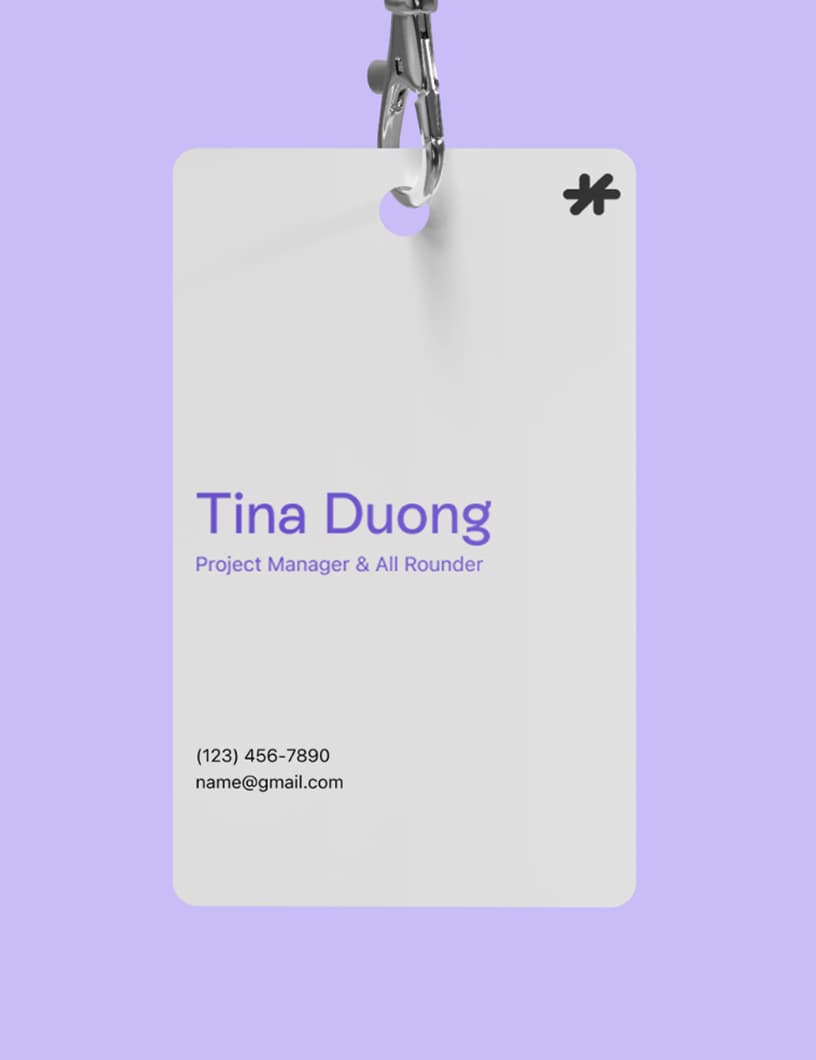
The PVC lanyards have a smooth, glossy finish that feels durable and high-quality, with the Harmony logo and colour palette subtly integrated for a polished, professional look.
Landing Page Design
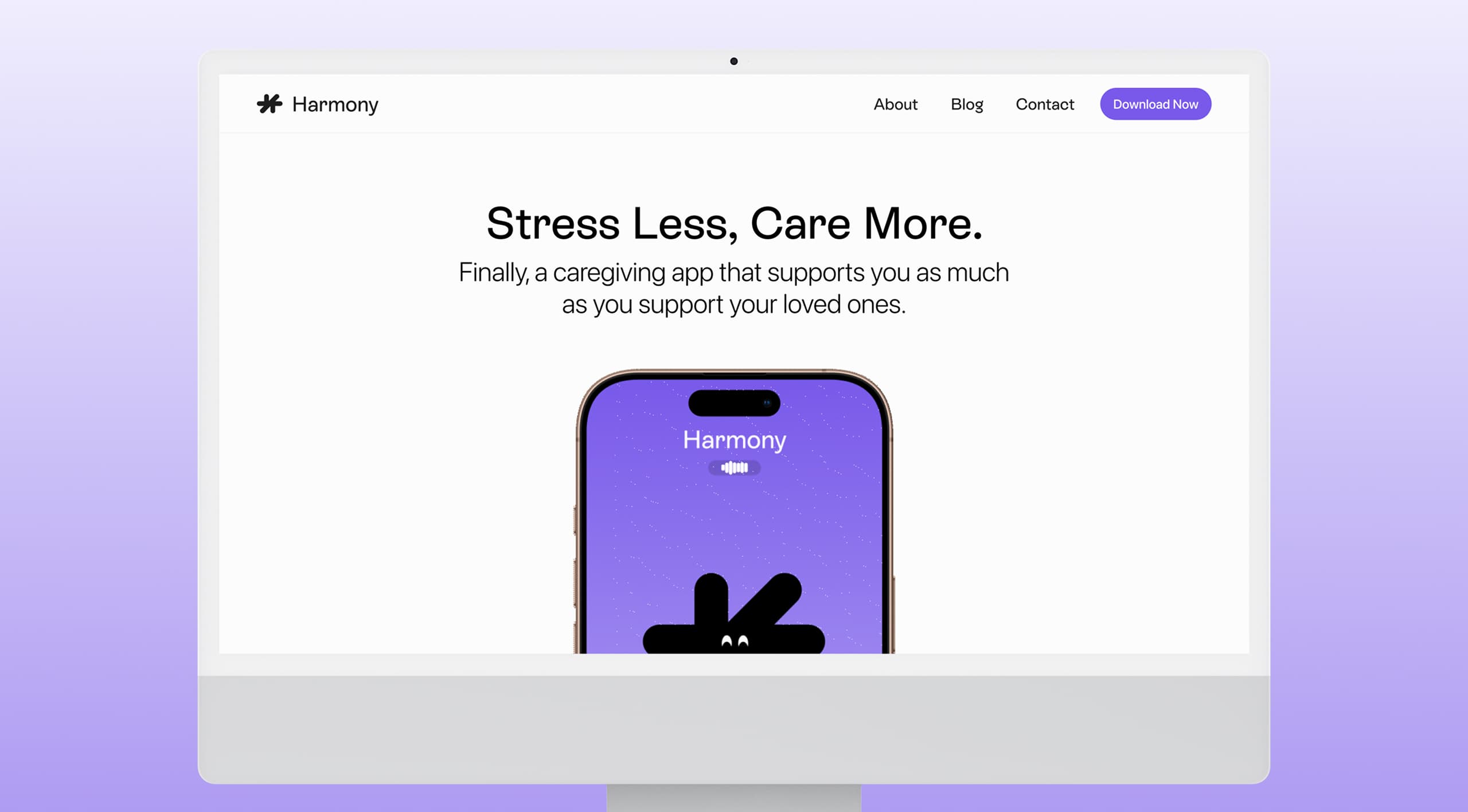
Harmony’s landing page was designed to build trust and encourage downloads. The layout is clean, visually engaging, and easy to navigate. It highlights the app’s key features and communicates the overall mission of supporting caregivers with clarity and compassion.
Learnings and Future Directions
Through developing Harmony, it became clear that truly understanding caregivers’ daily routines is essential to delivering meaningful support. Caregivers don’t just need more tools—they need better ones that are sensitive to their needs and contexts.
Looking forward, future iterations of Harmony could include AI-powered care recommendations based on observed patterns and routines. Shared care plans and family updates could be expanded to offer deeper collaboration. Enhanced personalization and seamless cross-platform support are also areas of exploration to further improve care coordination.
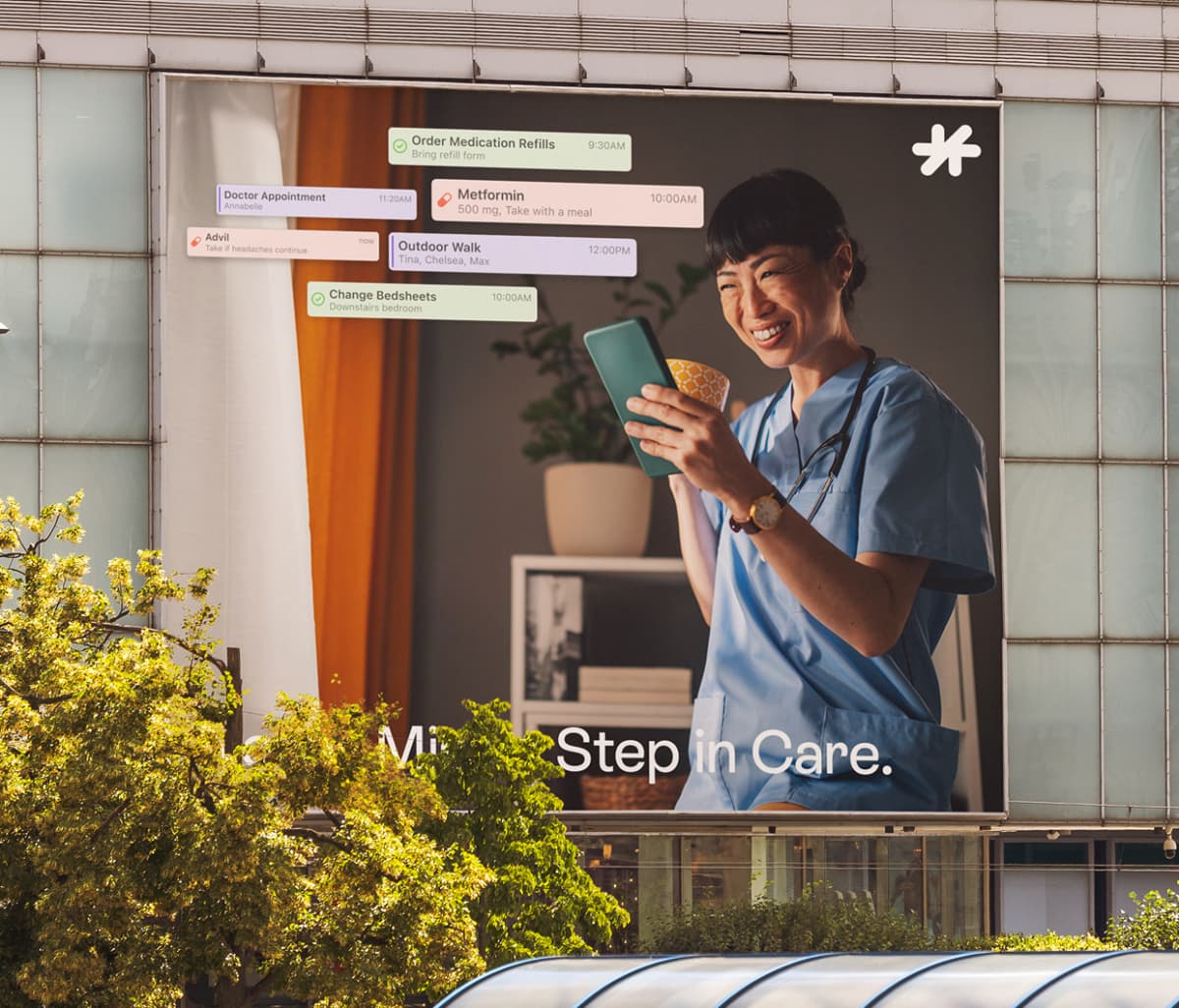
Harmony has evolved with the project team’s insights into designing for care. At its heart, it aims to make caregiving more manageable, more connected, and more human.
Special Thanks
This project would not have been possible without the support, insights, and collaboration of many generous individuals.
Thank you to the caregivers who shared their personal stories and experiences with honesty and vulnerability. Your insights were the foundation of Harmony and your strength continues to inspire this work.
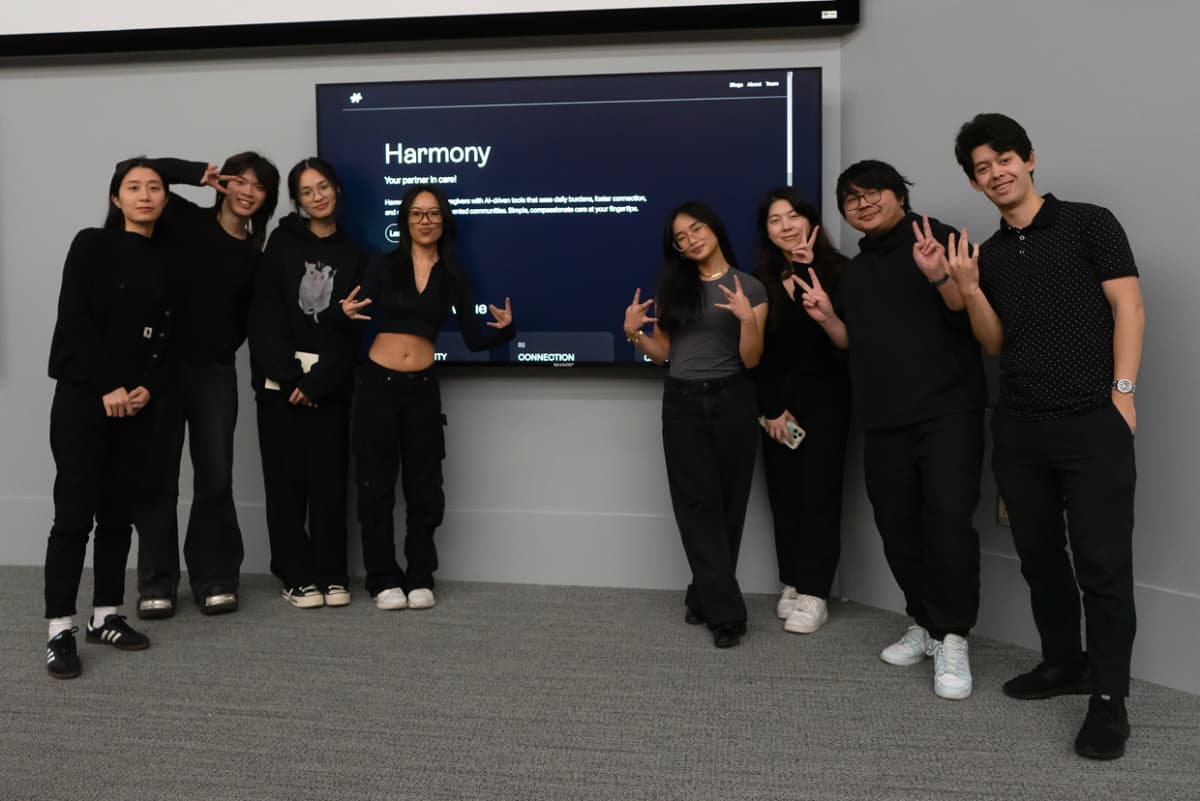
To my teammates—Vitor, Angus, Annabelle, Max, Emmy, Keona, and Chelsea: thank you for your dedication, creativity, and teamwork throughout the development of Harmony. Your countless sleepless nights and contributions brought this vision to life.
Gratitude also goes to the instructors and mentors in the BCIT D3 and FSWD programs for their guidance and encouragement during every stage of this journey.
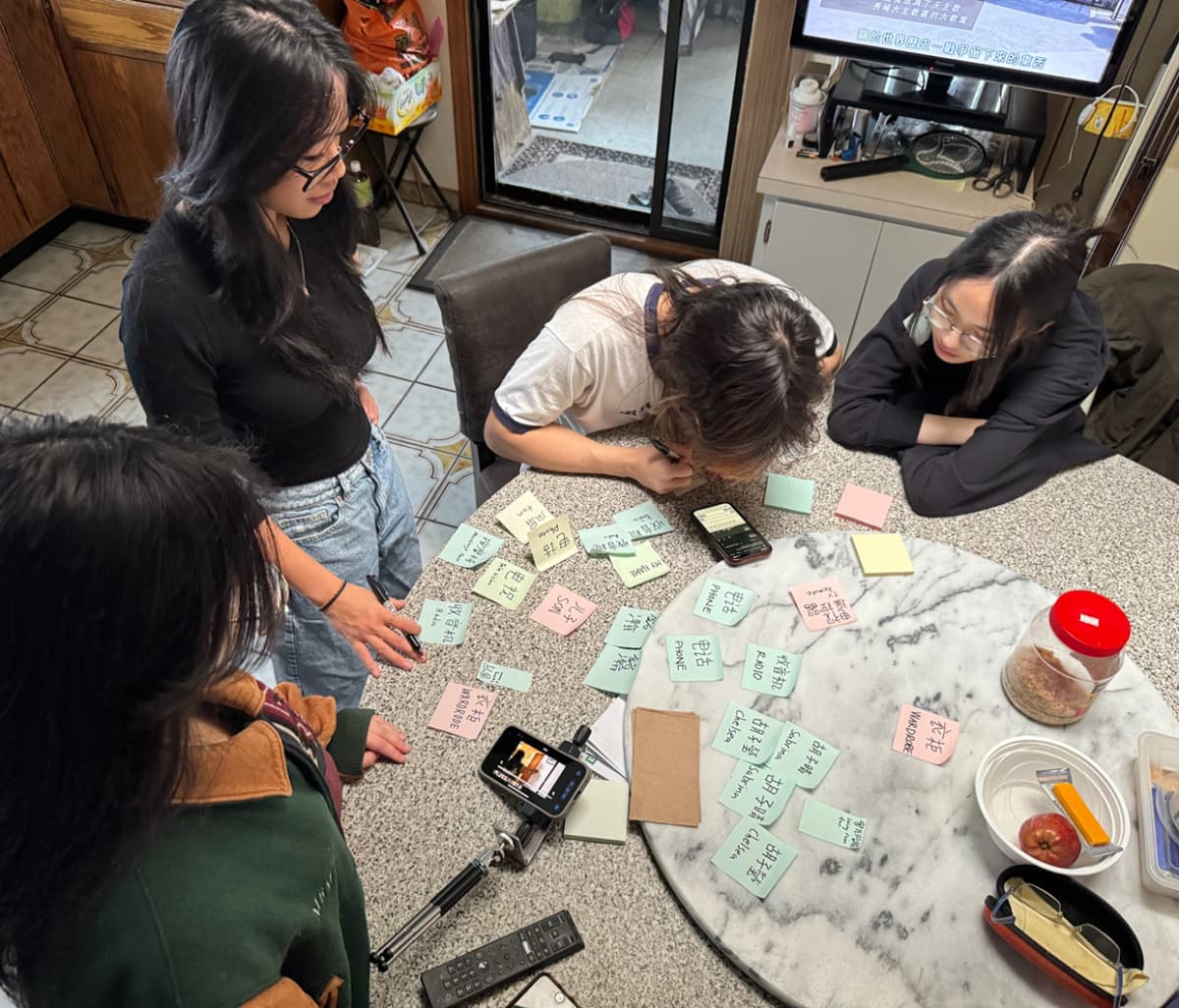
Lastly, thank you to our friends, family, and community members who supported us with feedback, encouragement, and care. This project is for you. Harmony has evolved with the project team’s insights into designing for care. At its heart, it aims to make caregiving more manageable, more connected, and more human.